The Real Impact of AI Overviews on Website Traffic and Rankings

Search is changing in a very visible way. Earlier, your customer searched on Google, saw organic results, opened a few websites, and then made a decision. Today, Google AI Overviews can answer many questions directly at the top of the search results page.
For users, this feels quick and convenient. For businesses, it raises a serious question.
If Google gives the answer before the user clicks, what happens to your Organic Traffic and rankings?
The answer is not panic. The answer is preparation. Google AI Overviews may reduce clicks for some websites, but they can also create new visibility opportunities for brands that publish clear, trusted, and useful content. This is why current SEO Trends are moving toward stronger content quality, better authority signals, and a practical GEO Strategy.
What Google AI Overviews Really Change
Google AI Overviews change how users consume search results.
Instead of showing only a list of links, Google can now show an AI-generated summary for selected queries. These summaries may pull information from different sources and show supporting links within or near the answer.
That means your website may still rank well, but the user’s attention may go first to the AI summary.
This affects your SEO in three ways:
Your ranking position may not bring the same number of clicks.
Your content may need to earn visibility inside AI-generated answers.
Your brand authority may matter more than basic keyword placement.
In simple words, Google AI Overviews do not remove SEO. They make SEO more demanding.
How AI Overviews Affect Organic Traffic
Organic Traffic may drop for basic informational queries.
If your website mainly answers simple questions, Google AI Overviews may satisfy the user before they visit your page. This is especially true for queries where the user wants a quick fact, definition, checklist, or short explanation.
A Pew Research analysis found that users who saw an AI summary clicked traditional results less often than users who did not see one. Ahrefs also reported that AI Overviews were linked with a lower average click-through rate for top-ranking pages on informational keywords.
This does not mean every business will lose traffic. The effect depends on your industry, keyword intent, content depth, and how useful your pages are after the first answer.
For example, a blog that only explains “what is SEO” may lose clicks. But a page that explains your SEO process, pricing factors, audit method, local expertise, case studies, and client problems can still attract serious leads.
So, the goal is not just to get traffic. The goal is to attract better traffic.
How AI Overviews Affect Rankings
Rankings still matter, but rankings are no longer the full story.
Your website can rank on page one and still receive fewer clicks if an AI summary answers the query above it. At the same time, your content may appear as a supporting source in Google AI Overviews, even when users do not scroll much.
Google’s own guidance says standard SEO practices remain important for AI features, and pages still need to be accessible, indexable, and eligible for Search. Google has also explained that work around AEO or GEO is still connected to SEO from the Search perspective.
This means your SEO foundation must stay strong.
You still need:
Technical SEO
Fast page speed
Mobile-friendly pages
Helpful content
Strong internal links
Schema markup
Clear service pages
Trusted backlinks
Reviews and case studies
Updated information
The difference is that your content now needs to serve both users and AI answer systems.
Why Some Websites Feel A Bigger Impact
The biggest traffic losses often happen when content is too generic.
If your website depends on repeated definitions, thin blogs, copied explanations, or keyword-heavy paragraphs, AI can summarize that information easily.
A 2026 research paper found that AI Overviews appeared more often for question-style queries than for many other search formats. This matters because most blogs are written around questions.
So if your blog answers only the surface-level question, users may not need to click.
But if your content gives experience, examples, local context, service details, and practical advice, it becomes harder to replace with a short AI answer.
That is where your GEO Strategy becomes useful.
What A GEO Strategy Means For Your Website
A GEO Strategy helps your content become easier for AI systems to understand, trust, and mention.
GEO stands for Generative Engine Optimization. In practical terms, it means preparing your website for AI-driven search without ignoring traditional SEO.
A strong GEO Strategy should include:
Clear answers to customer questions
Better service pages
Helpful FAQs
Original insights
Case studies
Reviews and proof
Structured data
Updated blogs
Strong brand mentions
Consistent business details
Author or agency credibility
For RedCube Digital, this means your website content should clearly show what you do, who you help, what problems you solve.
Your GEO Strategy should not be limited to adding AI-related keywords. It should improve the overall quality of your website.
How To Protect Organic Traffic
You need to move from basic content to useful content.
Here are practical steps your business can take.
Improve old blogs
Update blogs with recent data, better examples, stronger headings, FAQs, and clearer explanations.
Build stronger service pages
Your service pages should explain your process, results, industries, tools, problems solved, and client benefits.
Target decision-based keywords
Do not focus only on “what is” queries. Add comparison, pricing, service, audit, local, and solution-based content.
Add original experience
Share campaign learnings, client problems, audit observations, and practical insights from real work.
Use schema markup
Structured data helps search engines understand your content better.
Build your brand presence
Reviews, case studies, social proof, PR mentions, and business listings can improve trust.
Track AI visibility
Search your key services in Google, Gemini, ChatGPT, Perplexity, and Bing Copilot to see whether your brand appears.
These actions help protect Organic Traffic while improving your chances of visibility inside Google AI Overviews.
What Current SEO Trends Tell Us
.png)
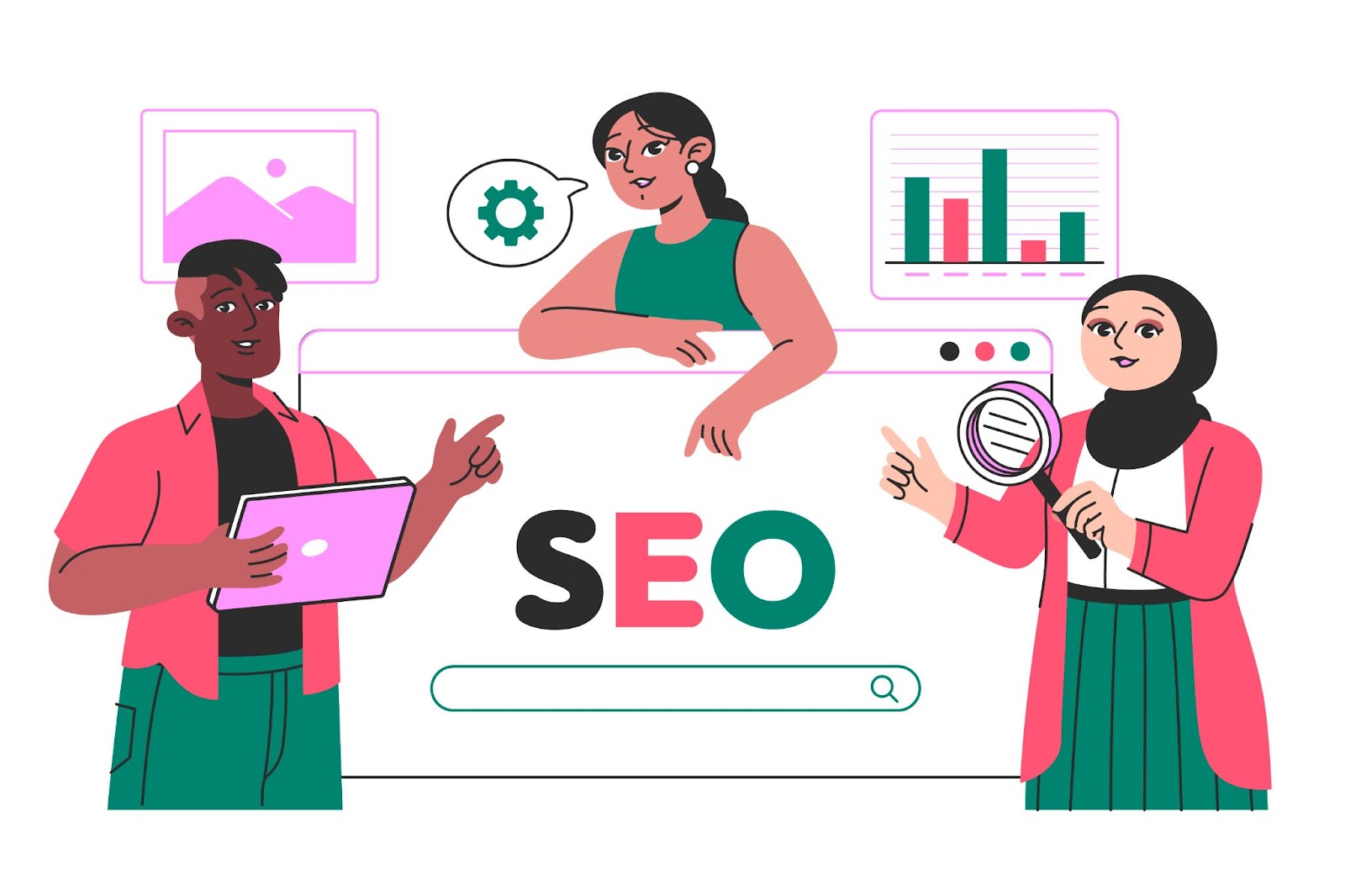
Current SEO Trends show that websites cannot depend only on rankings and keywords. You need stronger page quality, clearer brand positioning, and content that answers real questions with confidence.
BrightEdge reported that overlap between AI Overview citations and organic rankings increased across its 16-month tracking study. This suggests traditional SEO and AI visibility are becoming more connected over time.
For your business, the message is clear. Do not stop SEO. Improve it.
A better SEO plan now includes:
Technical health
Search intent research
Useful content
Authority building
GEO Strategy
AI visibility tracking
Conversion-focused pages
That is how you reduce risk and find new visibility opportunities.
The Final Note
Google AI Overviews are changing search, but they are not the end of SEO.
They may reduce clicks on basic informational searches, but they also push businesses to create better content, stronger websites, and clearer brand authority.
If you want to protect your Organic Traffic, you need more than rankings. You need a strong SEO foundation, useful content, and a smart GEO Strategy that helps your brand appear across traditional search and AI-powered results.
At RedCube Digital, we help businesses improve SEO, strengthen website content, study changing SEO Trends, and prepare for AI-driven search visibility.
If you want your website to perform better in Google Search and AI search experiences, contact RedCube Digital today. You can also share your thoughts on how AI search has affected your website traffic.
FAQS
Q1. What are Google AI Overviews?
A. Google AI Overviews are AI-generated summaries that appear for selected searches and give users a direct answer with supporting links.
Q2. Do Google AI Overviews reduce Organic Traffic?
A. They can reduce clicks for simple informational searches, especially when users get enough information from the AI summary.
Q3. Do rankings still matter after AI Overviews?
A. Yes. Rankings still matter, but you also need better content structure, authority signals, and AI visibility.
Q4. What is a GEO Strategy?
A. A GEO Strategy helps your content become easier for AI-powered search systems to understand, trust, and include in generated answers.
Q5. How can RedCube Digital help?
A. RedCube Digital can audit your website, improve technical SEO, update content, build a GEO Strategy, and help your brand prepare for changing SEO Trends.

Comments
Post a Comment